


How Listings and Delistings Affect Cryptocurrency Prices
For a long time, there has been a strong belief in the crypto community that a cryptocurrency listing on an exchange is an event that inevitably positively impacts its price. If a cryptocurrency is not traded on any major exchange, its prospects for price growth are limited — but they will certainly appear once it’s listed. Conversely, delisting is often seen as a sign that the cryptocurrency can be forgotten forever.
However, 2024 seems to have seriously shaken this belief. Let’s delve into the details:
- How important is it for a cryptocurrency to be listed on major centralized exchanges today?
- Should you consider acquiring an asset that is not yet (or is no longer) listed on exchanges?
- If so, where can such purchases be made?
Cryptocurrency Price after Listing on an Exchange
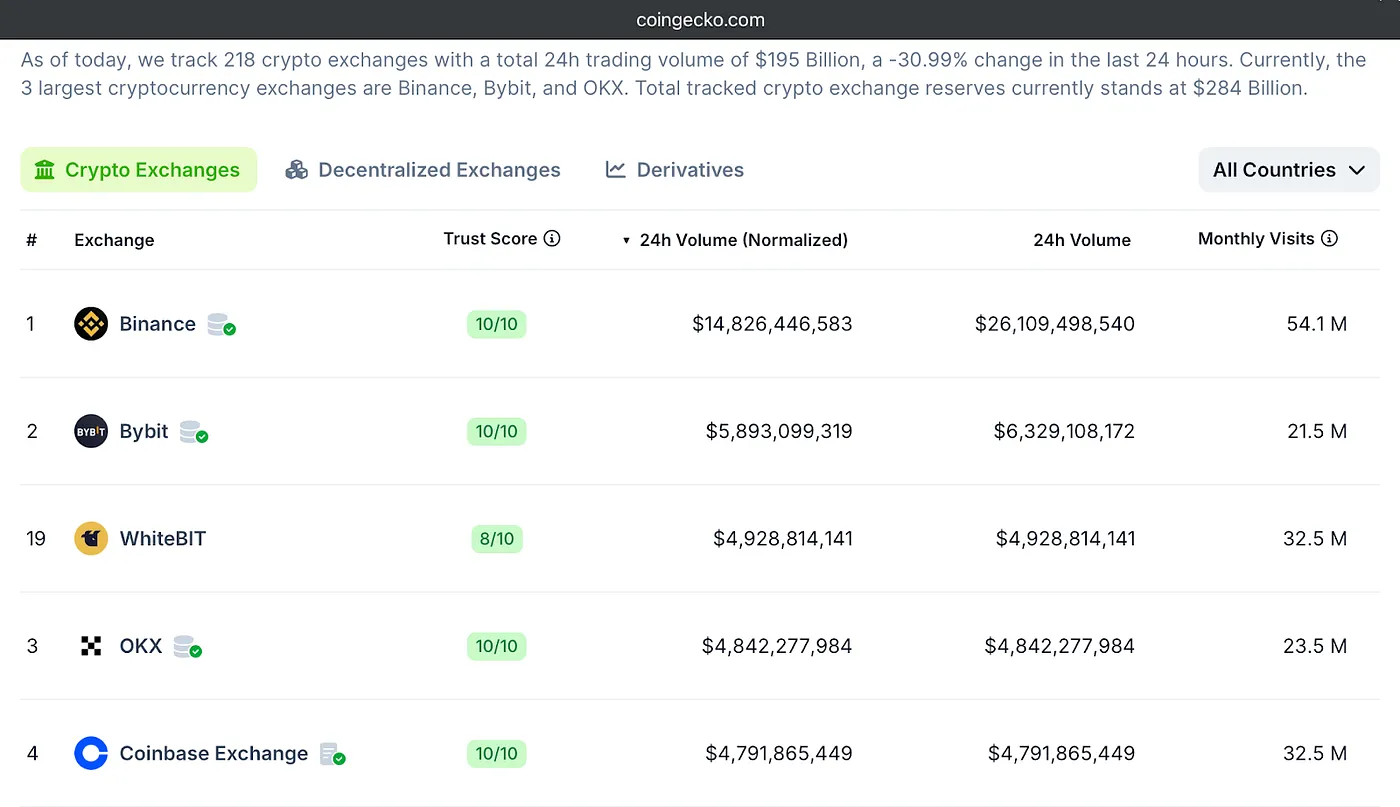
In rankings like those on CoinGecko and other similar platforms, Binance has held the top spot for trading volume for several years. As a result, listing on Binance is considered a milestone event for any cryptocurrency. Such listings are often followed by a price pump, at least in the short term.
A classic example of a successful listing is BitTorrent:
- Trading began on February 3, 2019, with a token price of $0.00012.
- By May 29, 2019 — four months after the IEO — the price had risen to $0.001781, a nearly 15-fold increase from the initial price.
- Over time, the price gradually declined, hitting a low of $0.000205 on March 18, 2020. Even then, this was 1.5 times higher than the starting price.
- In the bull run of 2021, the price reached $0.01075, an 89-fold increase from its initial value.
- On December 6, 2021, the project launched its own network, and the original tokens ceased to exist. They were converted to BitTorrent New tokens at a rate of $0.0026, still 22 times the original price.
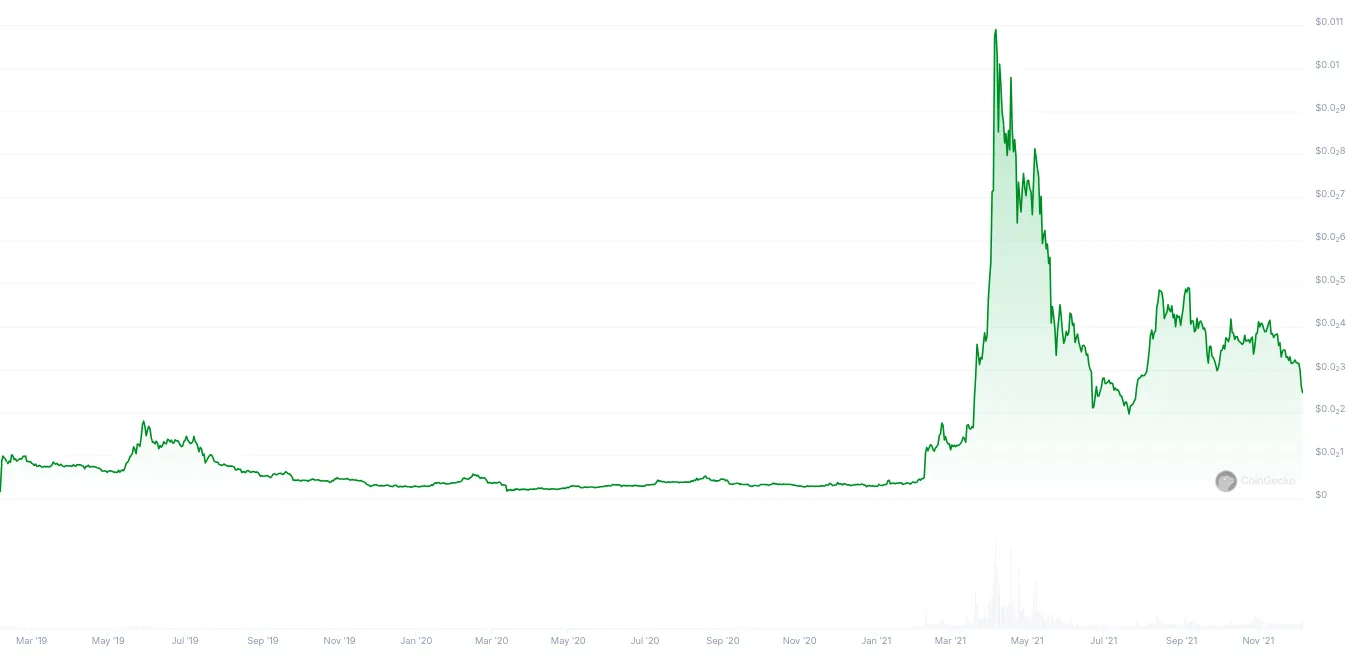
In BitTorrent’s case, the token price never returned to the level it was at the time of listing, always remaining above that threshold.
However, there have also been cases where the listing pump was extremely short-lived:
- The Lazio Fan Token was listed on Binance on October 18, 2021.
- The initial trading price was $1.
- Within seconds of trading, the price soared to $100.
- The first week ended with the price stabilizing at $12. Four weeks later, it dropped below $10, and as of December 8, 2024, it trades at $2.
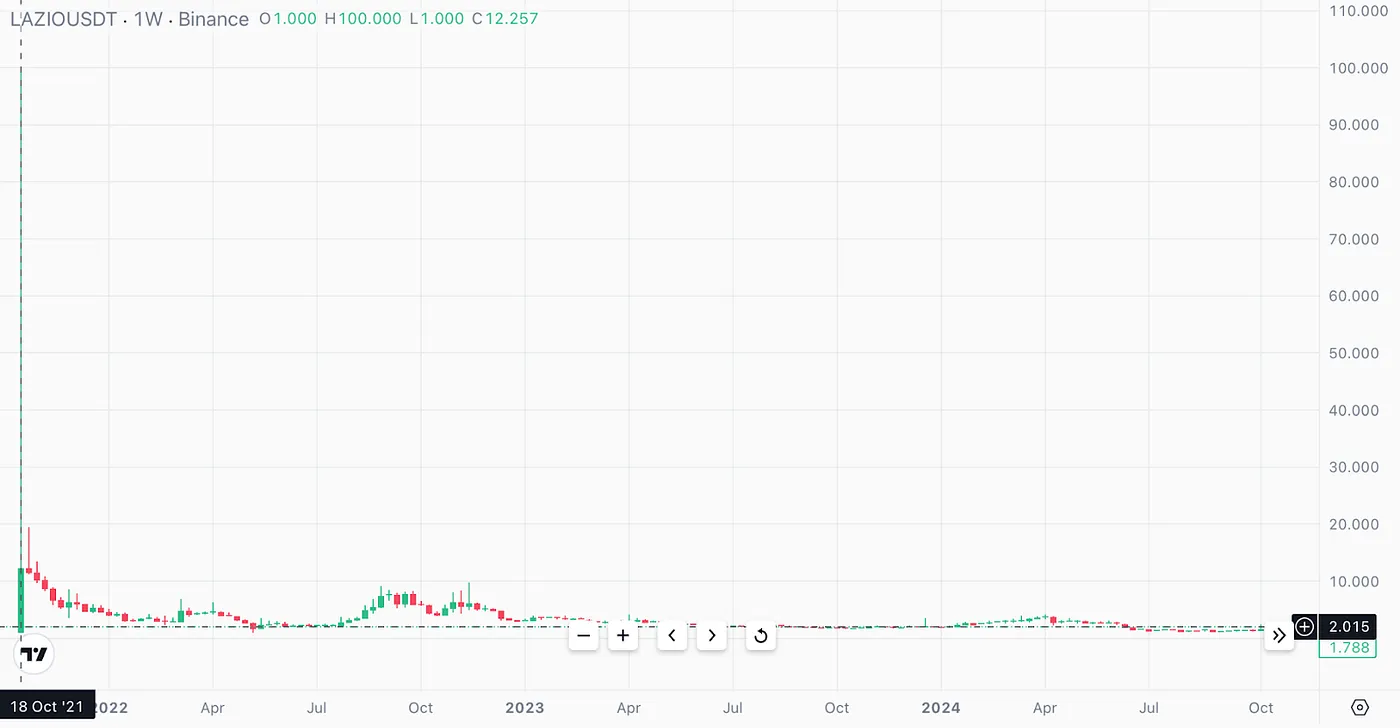
These examples reflect a typical price trajectory for tokens listed on Binance:
- An explosive, multi-fold increase during the initial seconds of trading;
- An immediate correction, erasing most of the gains;
- A gradual downward trend over time.
While prices may eventually revert to pre-listing levels, such declines often take months. Investors who acquire tokens during or before the listing usually have ample opportunity to sell at a profit.
What Happens to Cryptocurrencies After Delisting?
When a cryptocurrency is delisted from a major exchange, many assume it signals the end of interest in the asset. Additionally, reduced liquidity due to the lack of trading on a significant platform often serves as a clear signal to exit the asset.
Logic suggests that upon delisting, the price should plummet to near-zero levels and remain there indefinitely. Even an announcement of an upcoming delisting can trigger a sharp price drop.
A notable example is the Gifto token, whose delisting from Binance was announced on November 26, 2024.
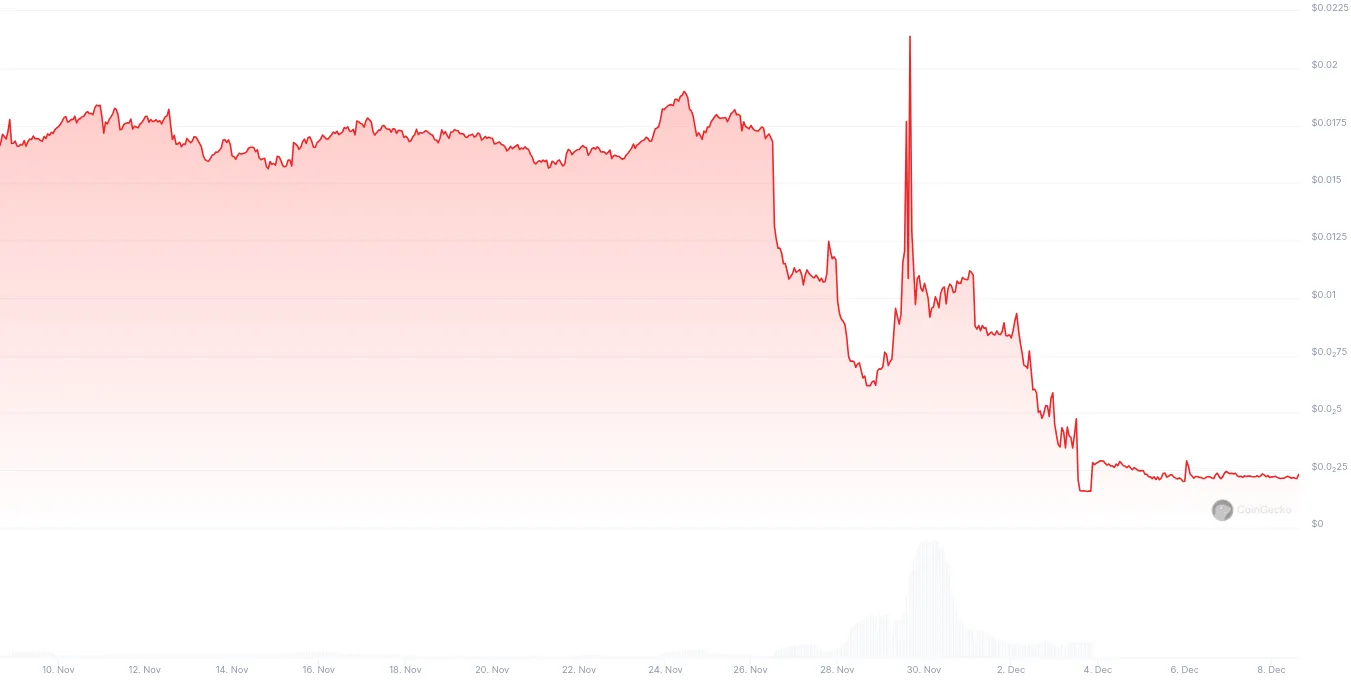
Today, exchanges no longer serve as the ultimate benchmark for a cryptocurrency’s value. While insignificant cryptocurrencies like Gifto are unlikely to garner public interest, prominent projects can exhibit price growth without exchange listings — or even experience declines immediately after being listed.
For this reason, if you see potential in a cryptocurrency, the absence of a listing on major exchanges should not deter you from acquiring it.
Examples Supporting This View
- Kaspa (KAS): Over the past 2.5 years, Kaspa’s price has grown steadily, albeit with significant pullbacks. The absence of a listing on Binance or other major exchanges has not hindered Kaspa’s prospects. If you believe in its future, you can confidently acquire it using stablecoins or other cryptocurrencies on Rabbit Swap.
- Goatseus Maximus (GOAT): Within one month, the token’s price surged from zero to $1, achieving a billion-dollar market capitalization — all without any involvement from major exchanges.
Successful projects like XMR, KAS, and GOAT prove that cryptocurrencies can thrive without Binance or other top platforms.